Welcome to the Adult Beverage Film Podcast, where we dive into movies like it’s the last drop in the bottle! Join your hosts, Kent Smith, Laura Truman, Patrick Keenan, and our resident cave-dweller expert, Carlisle “Squeaker” Hamrick, as we squeeze through the tight spaces of the spine-chilling horror classic, The Descent. We’ll share laughs, screams, and maybe even some survival tips—all while sipping on our favorite adult beverages.
The Descent is the story of six adventurous women who think a fun weekend means crawling through claustrophobic caves in the middle of nowhere. Little do they know, their spelunking trip is about to turn into a nightmare with creatures straight out of their worst hangovers. Picture it: tight tunnels, total darkness, and a bunch of cave-dwelling monsters who haven’t seen daylight—or a toothbrush—in centuries. It’s a girls’ night out gone horribly, hilariously wrong, proving once and for all that some places are just better left unexplored.
The Barbie Movie: A Splash of Pink, a Dash of Genius, and a Whole Lot of Fun
In the glittering world of cinema, where the serious often outshines the whimsical, the Barbie movie stands as a radiant testament to the power of fun and imagination. As the latest topic of our Adult Beverage Film Podcast discussions, this live-action adventure is not just a nostalgic nod to childhood playtimes but a surprisingly insightful exploration of identity, creativity, and the eternal quest for the perfect outfit.
The film, directed by a visionary whose grasp on the fantastical is as tight as Barbie’s grip on her endless career options, transforms a beloved doll into a vibrant, multi-dimensional character. Here, Barbie is not just a plastic icon but a symbol of boundless potential—be she an astronaut, a chef, or a president. The genius behind this film lies in its ability to infuse a seemingly simple concept with layers of humor, heart, and a hint of satire, all wrapped in a fabulously pink package.
At the heart of this cinematic confection is an irresistible performance by Margot Robbie, whose portrayal of Barbie is equal parts charm and chutzpah. Robbie navigates Barbie Land with a wide-eyed wonder that makes every viewer a willing accomplice in her escapades. Whether she’s navigating the perplexities of a world that doesn’t revolve around fashion or grappling with the existential crisis of a chipped nail, Robbie’s Barbie is relatable and endearing.
The supporting cast, featuring a lineup as diverse as Barbie’s wardrobe, adds an extra layer of sparkle to the narrative. Ryan Gosling’s Ken, portrayed with a delightful blend of cluelessness and earnestness, offers a hilarious counterpoint to Barbie’s polished perfection. Their dynamic, a playful parody of gender stereotypes, brings a fresh and humorous perspective to the age-old tale of doll meets doll.
What truly elevates Barbie from a fun flick to a must-see masterpiece is its script, peppered with witty one-liners and clever cultural references. The dialogue dances between the tongue-in-cheek and the downright laugh-out-loud, with moments that will resonate with both longtime fans and new audiences. This clever writing ensures that while the movie may be painted in shades of pink, its humor is anything but one-dimensional.
Our podcast, known for blending serious film critique with a hearty dose of irreverence (and the occasional cocktail), found much to savor in Barbie. The film’s playful approach to storytelling and its subversive undercurrents make it a perfect fit for discussions that range from the thematic to the trivial. After all, what could be more entertaining than dissecting the deeper meanings of Barbie’s dream house while sipping a perfectly shaken martini?
Beyond its entertainment value, Barbie offers a gentle, yet pointed commentary on the pressures of perfection and the joy of self-expression. It’s a film that celebrates individuality and creativity, reminding us that the world is richer for its diversity—whether in careers, personalities, or fashion choices. This inclusive message, wrapped in glitter and humor, is a refreshing reminder that it’s okay to be perfectly imperfect.
As we clink our glasses to this delightful film, it’s clear that Barbie is more than just a movie—it’s a celebration of the imaginative spirit that resides in all of us. So, whether you’re a lifelong fan of the iconic doll or simply in search of a good laugh, Barbie is a cinematic experience that promises to leave you smiling. And remember, if Barbie can be anything she wants to be, so can we all—especially when we have a great movie and a glass of something delicious in hand. Cheers!
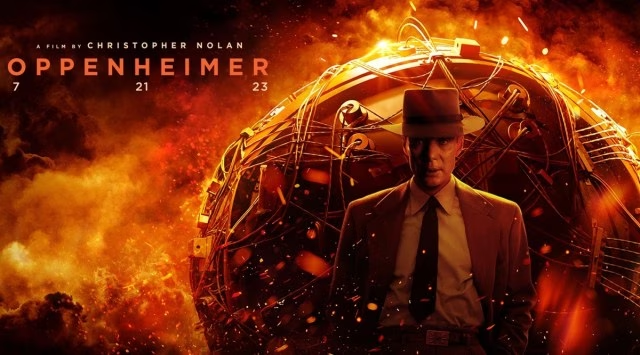
In the pantheon of cinematic endeavors that have sought to capture the intricate tapestry of history, few have approached the complexity and gravitas of Christopher Nolan’s latest opus, Oppenheimer. This film, a masterful fusion of biographical narrative and philosophical exploration, invites us into the enigmatic world of J. Robert Oppenheimer, the brilliant yet conflicted physicist known as the father of the atomic bomb.
As hosts of the Adult Beverage Film Podcast, where our discussions often drift from the casual sip of a fine bourbon to the profound depths of cinematic analysis, we were particularly struck by the film’s ability to navigate the moral and ethical dilemmas faced by its titular character. Oppenheimer is not merely a historical retelling but a nuanced portrait of a man wrestling with the consequences of his own genius.
Nolan’s direction, known for its precision and meticulous attention to detail, shines through in every frame. The film is a visual and auditory symphony, employing both stark realism and hauntingly beautiful cinematography to evoke the era’s tensions and the profound weight of scientific discovery. The pacing, deliberate yet compelling, mirrors the building pressure within Oppenheimer himself, as he grapples with the implications of unleashing such unprecedented destructive power.
At the heart of this narrative is Cillian Murphy’s portrayal of Oppenheimer, a performance that is as introspective as it is powerful. Murphy captures the physicist’s intellectual brilliance and the quiet turmoil that lies beneath his composed exterior. It’s a portrayal that invites empathy, if not agreement, with a man who stands at the crossroads of science and morality.
The supporting cast, including a mesmerizing performance by Emily Blunt as Oppenheimer’s wife, Kitty, and a formidable turn by Kenneth Branagh as General Leslie Groves, adds depth to the film’s exploration of the personal and political intricacies surrounding the Manhattan Project. Their interactions offer a microcosmic view of the broader societal and ethical questions at play—a delicate dance between duty, ambition, and the inevitable reckoning with one’s conscience.
What sets Oppenheimer apart, however, is its willingness to delve into the less tangible aspects of this historical narrative. Nolan doesn’t shy away from the philosophical quandaries that still resonate today: the ethical responsibilities of scientists, the limits of human understanding, and the haunting realization that knowledge can be both a gift and a curse. The film’s dialogue, sharp and thought-provoking, often feels like an invitation to the audience to ponder these same questions.
In our podcast discussions, we’ve often remarked on the importance of films that challenge viewers to think beyond the screen. Oppenheimer is a quintessential example of such a film. It doesn’t offer easy answers or neatly tied-up conclusions. Instead, it presents a complex tapestry of historical fact and philosophical inquiry, leaving viewers to grapple with the ramifications of Oppenheimer’s legacy—a legacy that is as relevant today as it was in 1945.
As we raise our glasses in contemplation of this cinematic masterpiece, we are reminded of the power of film to not only entertain but to provoke thought and stir the soul. Oppenheimer is a film that lingers long after the credits roll, much like the questions it poses—questions about the nature of genius, the burden of creation, and the ever-pressing need for humanity to navigate the fine line between progress and destruction. In the end, it is a testament to the enduring relevance of history and the stories we tell about it, as seen through the lens of one of the most pivotal figures of the 20th century.
“Dazed and Confused,” released in 1993, remains one of the most beloved cult classics in cinema history. The film, directed by the talented Richard Linklater, encapsulates the essence of indie filmmaking and showcases Linklater’s unique perspective on storytelling, character development, and his passion for authentic narratives.
Richard Linklater’s Journey as an Indie Filmmaker
Richard Linklater is renowned for his distinct approach to filmmaking, often defying mainstream conventions to produce works that resonate with audiences on a deeply personal level. As an indie filmmaker, Linklater believes in the power of genuine human connections and the beauty of ordinary moments. Throughout his career, he has consistently explored themes of youth, time, identity, and philosophical musings, establishing himself as a master of capturing the human experience.
“Dazed and Confused” and the Coming-of-Age Genre
“Dazed and Confused” perfectly embodies Linklater’s fascination with the coming-of-age genre. The film unfolds over the course of a single day and night, the last day of school in 1976. Linklater skillfully weaves a tapestry of interwoven stories, following a diverse ensemble of characters from different social circles. Each character is navigating the trials and tribulations of adolescence, seeking to find their place in the world.
Breaking Stereotypes and Embracing Realism
One of the hallmarks of Linklater’s indie filmmaking is his commitment to breaking stereotypes and presenting authentic portrayals of individuals. In “Dazed and Confused,” the characters are not one-dimensional archetypes but multi-faceted individuals with complex emotions and aspirations. By doing so, Linklater humanizes them, allowing the audience to connect with their struggles and joys.
Minimalist Approach to Narrative
Eschewing traditional Hollywood formulas, Linklater adopts a minimalist approach to narrative structure in “Dazed and Confused.” Rather than relying on a tightly woven plot, the film unfolds organically, much like a snapshot of real life. He allows the characters to interact and evolve naturally, giving the movie a sense of spontaneity that resonates with viewers.
Dialogue-Driven Filmmaking
Linklater’s gift for crafting authentic dialogue is a prominent feature of “Dazed and Confused.” He lets conversations flow freely, capturing the essence of everyday interactions. This approach not only adds to the film’s realistic charm but also grants each character a unique voice and personality.
Time as a Narrative Device
Time is a recurring theme in Linklater’s filmography, and “Dazed and Confused” is no exception. By exploring a single day in the lives of the characters, Linklater delves into the fleeting nature of youth and the bittersweet transience of adolescence. This nuanced portrayal of time creates a sense of nostalgia and reflection, making the film resonate with audiences of all generations.
Conclusion
“Dazed and Confused” is a testament to Richard Linklater’s vision as an indie filmmaker. Through his commitment to authenticity, minimalist storytelling, and genuine human connection, Linklater crafts a timeless coming-of-age masterpiece that continues to inspire audiences and aspiring filmmakers alike. As a champion of indie cinema, Linklater’s unique perspective has left an indelible mark on the world of filmmaking, making him a true icon in the industry.
Ladies, gents, and fabulous folks of the Adult Beverage Film Podcast, gather ’round for a review that’s about to get as colorful as Armand’s feather boa in “The Birdcage”!
Picture this: a quaint little Miami drag club owned by the charming Armand Goldman, played by the incomparable Robin Williams. Add in his diva partner, the fabulous Albert (Nathan Lane), and their feathered family, and you’ve got a recipe for a delightful disaster in this rom-com riot!
As the story unfolds, Armand’s son Val announces his engagement to the conservative Barbara Keeley, and guess what? Her parents are the right-wing, moral police type! Cue the madness, mischief, and martinis, darling!
Watching Robin Williams, the comedic genius, parade around as a flamboyant drag queen, while trying to maintain a “straight” facade to impress Barbara’s parents, is nothing short of a belly-aching laugh-fest! We’re talking about some of the most hilarious identity-shifting escapades this side of Cinemaville!
Nathan Lane as Albert is a showstopper! His over-the-top expressions and sharp-witted banter with Robin Williams are a match made in cinematic heaven. You’ll be clutching your pearls from laughter and reaching for your adult beverage of choice to cope with the delightful chaos unfolding on screen!
The supporting cast is just as fabulous! Hank Azaria as Agador Spartacus, the flamboyant housekeeper, serves up laughs like it’s a buffet of comedic gold! And Gene Hackman and Dianne Wiest as Barbara’s parents? Oh, they’re perfect as the uptight conservative duo caught in the whirlwind of this flamboyant farce.
Now, let’s talk about the sets and costumes! The glitzy, glammy world of “The Birdcage” is a visual feast for the eyes. Feather boas, sequined gowns, and enough glitter to make the Kardashians jealous! If you’re not already planning a themed movie night with friends after watching this, then you’re missing out, darling!
Beyond the laughs, “The Birdcage” carries a heartwarming message of love, acceptance, and the definition of family. Beneath the fabulous façade, it beautifully reminds us that love knows no boundaries and that being true to ourselves is something worth celebrating. Aww!
So, dear listeners of the Adult Beverage Film Podcast, if you’re looking for a movie that serves up belly-aching laughter, wacky misadventures, and a touch of heart, “The Birdcage” is your ticket to the wildest, most entertaining ride! Mix yourself a divine cocktail, sashay your way to the couch, and let this hilariously heartwarming fiasco unfold before your eyes! Cheers, darlings!