


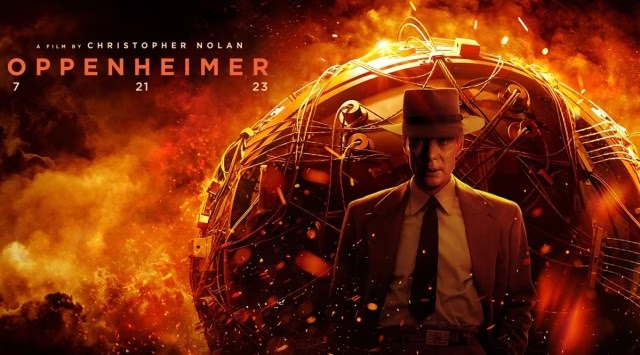
In the pantheon of cinematic endeavors that have sought to capture the intricate tapestry of history, few have approached the complexity and gravitas of Christopher Nolan’s latest opus, Oppenheimer. This film, a masterful fusion of biographical narrative and philosophical exploration, invites us into the enigmatic world of J. Robert Oppenheimer, the brilliant yet conflicted physicist known as the father of the atomic bomb.
As hosts of the Adult Beverage Film Podcast, where our discussions often drift from the casual sip of a fine bourbon to the profound depths of cinematic analysis, we were particularly struck by the film’s ability to navigate the moral and ethical dilemmas faced by its titular character. Oppenheimer is not merely a historical retelling but a nuanced portrait of a man wrestling with the consequences of his own genius.
Nolan’s direction, known for its precision and meticulous attention to detail, shines through in every frame. The film is a visual and auditory symphony, employing both stark realism and hauntingly beautiful cinematography to evoke the era’s tensions and the profound weight of scientific discovery. The pacing, deliberate yet compelling, mirrors the building pressure within Oppenheimer himself, as he grapples with the implications of unleashing such unprecedented destructive power.
At the heart of this narrative is Cillian Murphy’s portrayal of Oppenheimer, a performance that is as introspective as it is powerful. Murphy captures the physicist’s intellectual brilliance and the quiet turmoil that lies beneath his composed exterior. It’s a portrayal that invites empathy, if not agreement, with a man who stands at the crossroads of science and morality.
The supporting cast, including a mesmerizing performance by Emily Blunt as Oppenheimer’s wife, Kitty, and a formidable turn by Kenneth Branagh as General Leslie Groves, adds depth to the film’s exploration of the personal and political intricacies surrounding the Manhattan Project. Their interactions offer a microcosmic view of the broader societal and ethical questions at play—a delicate dance between duty, ambition, and the inevitable reckoning with one’s conscience.
What sets Oppenheimer apart, however, is its willingness to delve into the less tangible aspects of this historical narrative. Nolan doesn’t shy away from the philosophical quandaries that still resonate today: the ethical responsibilities of scientists, the limits of human understanding, and the haunting realization that knowledge can be both a gift and a curse. The film’s dialogue, sharp and thought-provoking, often feels like an invitation to the audience to ponder these same questions.
In our podcast discussions, we’ve often remarked on the importance of films that challenge viewers to think beyond the screen. Oppenheimer is a quintessential example of such a film. It doesn’t offer easy answers or neatly tied-up conclusions. Instead, it presents a complex tapestry of historical fact and philosophical inquiry, leaving viewers to grapple with the ramifications of Oppenheimer’s legacy—a legacy that is as relevant today as it was in 1945.
As we raise our glasses in contemplation of this cinematic masterpiece, we are reminded of the power of film to not only entertain but to provoke thought and stir the soul. Oppenheimer is a film that lingers long after the credits roll, much like the questions it poses—questions about the nature of genius, the burden of creation, and the ever-pressing need for humanity to navigate the fine line between progress and destruction. In the end, it is a testament to the enduring relevance of history and the stories we tell about it, as seen through the lens of one of the most pivotal figures of the 20th century.
4o


